Benefits of a Brain Chip Implant?
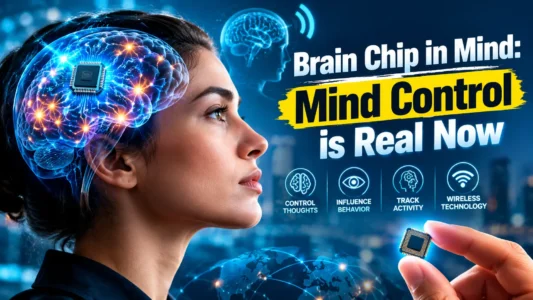
A brain chip implant (also known as a Brain-Computer Interface or BCI) is a small electronic device that is placed in or on the brain. It translates the electrical signals generated by your brain neurons into digital signals.
Visualize the brain as operating in the same manner as a supercomputer, continually communicating with electrical signals. When you think, talk, or move your hand again, there’s a unique electrical signal produced in your brain. The brain chip learns that pattern and wirelessly transmits it to a computer or smartphone application that turns your thought into an action.
In a human with impaired limbs, for instance, when the person thinks, move cursor to the right, it will recognize such a thought and cause the cursor on the screen to move to the right.
There are two categories of brain chips:
Brain Chips (Habilitation): These are inserted into the brain tissue. Their size is extremely small, almost like a coin in size; the flexible threads are extremely thin, even thinner than a human hair. Example: Neuralink N1. They give the highest accuracy.
Non-Invasive Brain Chips: These are not implanted. They are used externally, such as a headset or something with EEG sensors on top of the head. These are also less expensive and accurate, and offer safety.
Understanding how a brain chip can command devices by thinking
Many people ask, How can a chip understand my thoughts? The process is actually very logical and happens in 3 simple steps.
Step 1 – Signal Collection
The chip has thousands of micro-electrodes. Finding when put into the motor cortex area in your brain which controls the actions that you make, it listens to electrical activity from the neurons. Each thought has a different electrical signature.
S2: Signal Decoding and Translation:
The signals are strengthened and transmitted wirelessly (via Bluetooth) to an external control unit. These signals are then deciphered by advanced computer-based algorithms. The AI is able to recognize what each pattern represents. For example, it learns that this specific pattern means I want to move my hand up.
Step 3 – Action Output
After translating the digital version, the signal is sent to an external machine such as a computer, a smart phone or robotic arm, wheelchair or even a drone. Neuralink showed an individual patient in January of 2026 who could pilot an aircraft capable of carrying both a drone and programming remote controllers with his mind.
These all take place in a few milliseconds, making them appear nearly instant.
Neuralink Brain Chip Latest Update 2026 – What is Really Happening?
If we talk about brain chips, we cannot ignore Elon Musk’s company Neuralink. It is leading this revolution.
As of January 28, 2026, Neuralink has successfully implanted its N1 brain chip in 21 human patients across four countries: the United States, Canada, the United Kingdom, and the United Arab Emirates. Most of these patients are paralyzed or living with ALS (a disease where people lose the ability to move and speak).
What can they do now?
- Control a computer cursor and type emails
- Play video games like Chess and Civilization using only thoughts
- Browse the internet and use social media
- Control a robotic arm
- In the latest breakthrough, one patient named Kenneth Shuck was able to speak through an AI-cloned voice just by thinking of phonemes, the smallest units of sound
Neuralink has also announced plans to start high-volume, almost fully automated production of brain implants in 2026. The goal is to make the surgery as easy as LASIK eye surgery in the future and help millions of people.
But Neuralink is not alone. Other companies are also doing amazing work:
| Company Name | Type of Chip | Key Achievement | Target Patients |
| Neuralink (USA) | Invasive, coin-sized with threads | 21 human implants, thought-to-speech, drone control | Paralysis, ALS, blindness (Blindsight project) |
| Synchron (USA/Australia) | Endovascular (inserted via blood vessel, no open brain surgery) | First to get FDA approval; patients texted and shopped online with thoughts | ALS patients |
| Blackrock Neurotech | Utah Array | Patients controlled prosthetic arms for over 10 years | Spinal cord injury |
| Precision Neuroscience | Thin film that sits on brain surface | Less invasive, removable | Stroke, brain injury |
Let’s take a look at some of the best advantages of brain-computer interface technology. Let’s now explore some advantages of brain-computer interface technology.
Technology is life-changing, especially for people with disabilities.
- Reinstates Independence for Paralyzed People: A man or woman who cannot move or speak independently can now speak, use a computer, and move around in a wheelchair on his or her own.
- Treating depression, anxiety, epilepsy, Parkinson’s, and even memory loss are the most likely future targets of neurological disease treatment via the stimulation of specific brain regions with future chips.
- Enhances Vision and Hearing: The next step will be to stimulate the visual cortex directly to give vision to a blind person, called Blindsight.
- Rise of superhumans: In the future, you may be able to write an email 3 times faster only through thinking, or control multiple devices at home while multitasking.
- Genetic World Control: The first patient of Neuralink named Noland Arbaugh has purportedly played games and browsed the web with his implant for 10 hours a day.
Thought-controlled robotic arms, drones, and smart home devices cut out the physical barriers.
In the realm of medical research, it is about better understanding how the human brain works and potentially making a contribution to the development of treatment for Alzheimer’s and other diseases.
What are the risks and adverse effects of brain chips? Does it pose any ethical issues?
This technology nzo kv a lot, but lb also xcnulce risks. We can be very straightforward about it.
- Medical Risks: These include any risks associated with brain surgery, like tissue damage, infection, or bleeding. The initial Neuralink devices launch very fine hairs into the brain, reducing electrical quality. Long-term effects of having electronics inside the brain for 20-30 years are still unknown.
- This is the major concern: privacy and Security risks. Your brain data is the most private data in the world. Who owns it? Can a company read your thoughts? Can someone hack your brain chip? What if your employer monitors your concentration level? But these are serious legal and ethical issues that governments have yet to answer.
- Cost and Accessibility: Currently, this technology is available only in clinical trials and is in the hundreds of thousands of dollars. Will it be available only for rich people? That’s an issue of equity.
- Mental Identity: Does having a chip make you feel better or help you remember more mean that you are the same person? This poses philosophical issues on manhood.
| Pros of Brain Chip | Cons / Risks of Brain Chip |
| Gives voice to people who cannot speak | Risk of brain surgery and infection |
| Restores movement and independence | High cost, not affordable for everyone |
| Potential to cure blindness and paralysis | Brain data privacy and hacking risk |
| Helps understand the human brain better | Unknown long-term effects on the brain |
| Future superhuman abilities | Ethical issues about controlling humans |
Future of Brain Chip Technology: What Will Happen in the Next 10 Years?
The future of brain chips is both exciting and a little scary. Here is what experts predict by 2030-2035:
- From Medical to Everyday Use: Today, it is only for paralyzed patients. Tomorrow, it could be for everyone. Elon Musk says healthy people will get chips to compete with Artificial Intelligence.
- Telepathy Will Be Real: Instead of calling someone, you will just think about them, and your thought message will be sent. Neuralink calls this product “Telepathy”.
- Memory Backup: Imagine saving your memories like you save files on Google Drive. You could never forget anything.
- Controlling Everything: Your car, your home, your office, all controlled by your mind. Smart cities will be connected directly to your brain.
- Strict Laws Will Come: Governments will have to make new laws for “cognitive liberty”, the right to protect your thoughts and prevent forced mind-reading.
Conclusion: Are we to be excited or afraid?
No longer science fiction, a brain chip implant that lets us control the world with our thoughts. This is a miracle to those who have been rendered unable to walk, speak, and live independently. For them, it is a new life.
For the rest of us, it is a technology we must approach with both excitement and responsibility. The science is real, the progress in 2026 is faster than ever, and mass production is starting. But we must also ensure that this powerful technology is safe, private, and available to everyone, not just a few.
If you found this article helpful, share it with someone who loves technology and science. The age of a mind-controlled world has begun, and you are living in it.