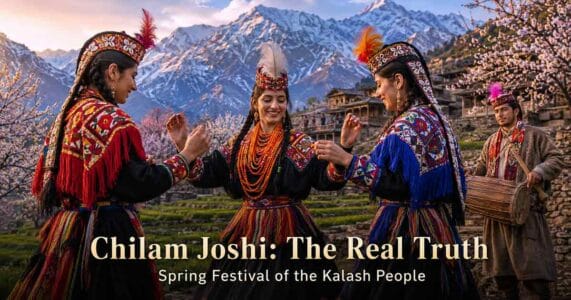
The Kalash ethnic group lives in inaccessible towns in the north of Pakistan, and they have a wealthy Spring celebration called Chilam Joshi. Tune, cotillion, favoring of crops and monsters, and collaborative devouring are part of the celebration. Though the rituals at the festival have been identified as having an element of a mythological nature, they are actually a seasonal renewal festival of the community, with a strong linkage to Kalash identity and oral tradition. In this article, we will delve into the festival’s themes and significance, as well as debunk some myths and set out the truth.
Introduction
Microfestivals can be a big story for a people’s life and survival. Chilam Joshi is important as it is a happy spring festival and also a part of the contemporary history of Kalash culture. Learn where and when it happens, how it is carried out, some common myths, and why Chilam Joshi is still relevant today!
Chilam Joshi Spring Festival: What is it?
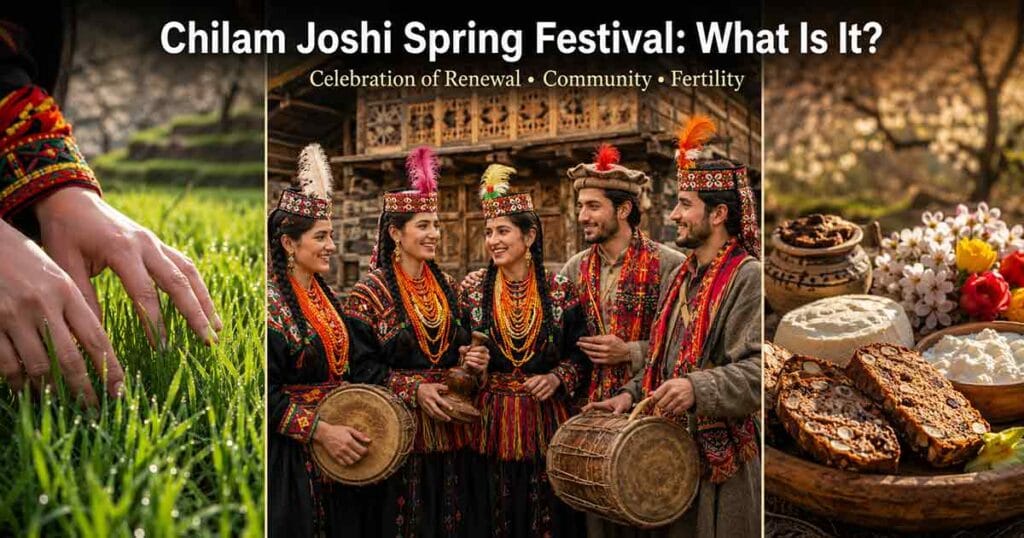
Chilam Joshi is the Kalash spring festival celebrated over many days. To celebrate the warmer weather, the new growth, and the promise of the season. It includes prayer, songs, dance, and congregational worship. It is a time about fertility, and it’s a time about fields, and about animals, and about families, and about songs, and about the acts of blessing and renewal, and about Chilam Joshi.
No public adverts are made for this jubilee, and there are no religious services conducted; it’s bedded in the normal life of the village and is part of the diurnal work of the townies, who embellish their houses, dress in special apparel, and hold collaborative refections. The first time people visit Chilam Joshi for their first Spring Festival, it’s not so much a sightseeing destination as it is a place where they can connect and feel like part of a community.
What’s the setting and time of Chilam Joshi?
In the Kalash denes of the Northwest region of Pakistan, in the Hindu Kush Mountains of Chitral District, Chilam Joshi is deified in Rumbur, Bumburet, and Birir. The festival is usually held in late April/early May, when snow begins to fall off the mountains, and horses begin to stir. It generally occurs in late April, early May, coinciding with the first snow melt and horse activity after a harsh winter on the mountain.
The dates can be different in different valleys and differ from one local calendar to another since the Kalash observe the seasons and do not adhere to a single calendar. Visitors from neighboring towns and even from abroad flock to the places, but the rough mountain roads and the weather are not guaranteed, and so planning is essential.
So, who is Chilam Joshi?
The Kalash people: a quick introduction
The Kalash are a small indigenous group of about a few thousand people, who communicate in their language, practice their customs, and have their own traditional polytheistic beliefs. They reside in close-knit communities in the mountains and have a large number of customs that are well preserved through oral tradition. They are a colourful bunch of people with their colourful clothes, various types of headgear, and vibrant music.
What makes this festival special for them?
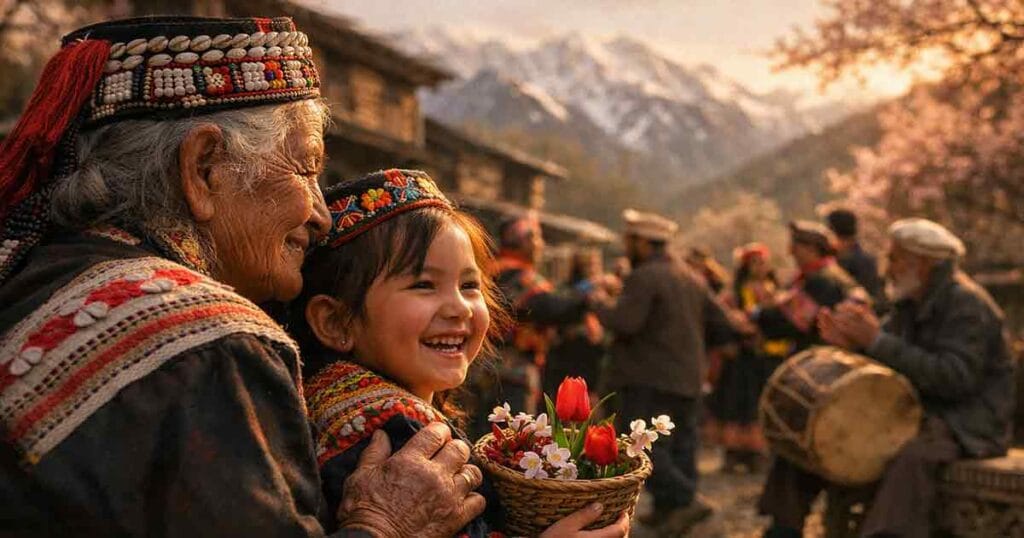
Chilam Joshi is a special case of Kalash as it contains local myths, ancestral songs, and rituals which show the Kalash community’s interaction with nature, seasons, and ancestors. The festival is NOT a continuation of any larger body of belief and was developed locally and remains unique because of the Kalash’s geographical isolation. It was that isolation that allowed the customs to be maintained that are unusual today elsewhere, and gave Chilam Joshi his particular cultural identity and sensibility to change.
Here are a few of the key ceremonies and exercises for the festival. The occasions held by Chilam Joshi are diverse in each town, but there are certain occasions that show up in different valleys.
Festivals of dancing and singing
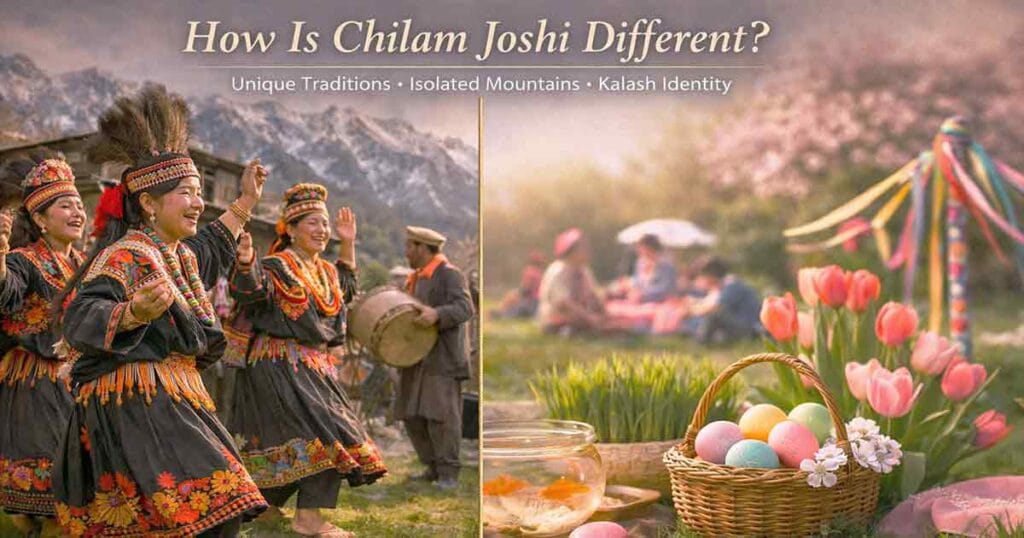
Society tunes and circle moves are sung in open ranges by groups. Ladies wear expound weaved dresses and tall hats, whereas men wear woolen coats and colorful scarves. Music and movement celebrate community bliss and pass on messages almost every season, cherish, and family line. The performances are in the nature and spirit of folk song and dance festivals in other parts of the world.
Compare song and dance festival traditions
Spring cleaning and preparations traditions
Families begin by cleaning their homes, mending fences, and ritually cleansing their living areas before the main celebrations to welcome spring’s life. Special attention to livestock care may be required, as the survival of healthy animals is essential. The typical and physical cleansing is an expression of a straightforward rule.
Special foods and offerings
Locally produced bread, dairy products, and meat items, if available. They can make offerings for great harvests or well-being in the holy places or open communal spaces. The messages of the celebration are passed on in numerous of these common components: the sharing of nourishment, the favoring of areas, and the revitalization of social bonds.
The Real Story of the Chilam Joshi
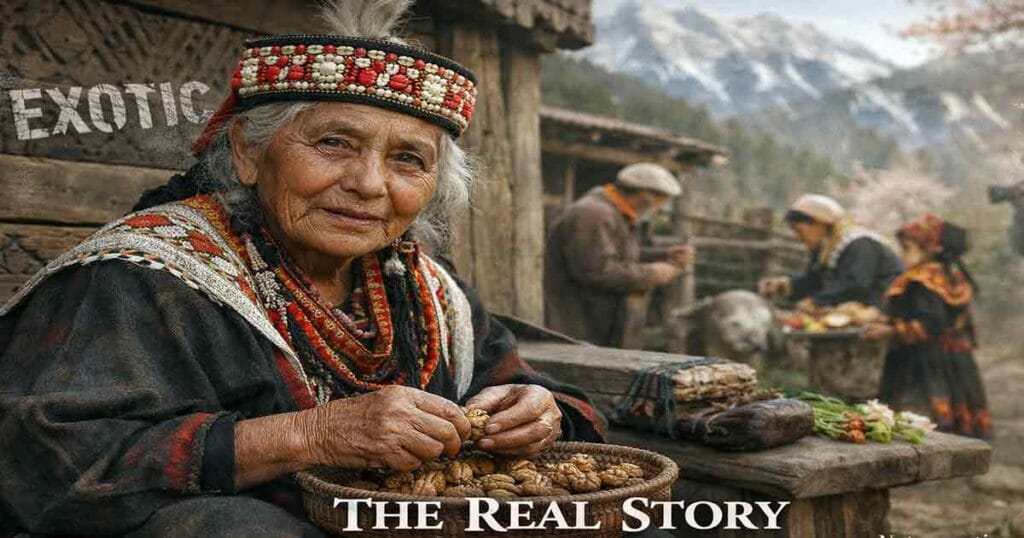
Exotic stories are heard by many outside, and they assume that Chilam Joshi is sensational or ancient. It’s the true story of renewal in spring, based on the ecology and social life of the place. Often, myths and facts in Chilam Joshi are contrary when travellers or media label customs as Pagan Rituals. The celebration is, in truth, a down-to-business and typical arrangement to regular necessities, celebrating ripeness, fortifying connections within the community, and exchanging information from one era to the next.
Be watchful of posts that have gone viral and are sensationalizing or distorting Kalash life, as they are illustrations of social deception, fair like posts that utilize other comparable settings (see social misinterpretations). Well-researched, well-sourced data is more enlightening than sentimentalist features.
Why should Chilam Joshi be important today?
The preservation of culture in the contemporary world.
Chilam Joshi supports the Kalash to sustain their language, songs, and knowledge. With influences from the outside, the Festival becomes a living classroom, with elders sharing stories, crafts, and values.
The festival and tourism.Tourism and its effect on the festival
The entry of visitors implies cash and consideration, which may offer assistance to keep up conventions, but can also lead to their modification. Customs may adapt to oblige visitor times, or communities may be forced to perform for visitors.
Responsible tourism is able to contribute to the Kalash economy and respect their choices and privacy (see research on tourism impacts). The festival’s future is also beset by a dilemma of maintaining cultural integrity while benefiting the economy.
How is Chilam Joshi different from other Spring Festivals?
Similarities with Easter or Nowruz
Chilam Joshi is a celebration of resurrection and recharging, comparable to the celebration of Easter and Nowruz. All three are turning points in the regular cycle, and each communicates trust for the season through custom, with music, nourishment, and family all playing a part. Common subjects are cleansing, richness, and community celebration.
The uniqueness of Chilam Joshi
Chilam Joshi is unique in that it comes out of the Kalash’s polytheistic beliefs, local songs, and mountain life. The celebration is not a national or devout occasion but has become an expression of their culture; the visual fashion, the Kalash dress, the headgear, and the tune shapes are special to their culture.
FAQs
Is Chilam Joshi of any great religion?
Chilam Joshi isn’t a part of a major religion comparable to Islam, Christianity, or Hinduism. It’s connected to the Kalash conventional conviction frame, which combines the adoration of their precursors and the reverence of regular divinities. Inevitably, a few Kalash have joined the confidence of their neighbors, and the celebration itself has been impacted by pre-Islamic customs.
Are there a few constraints on the number of exterior participants?
Generally, no formal authorizations are required for pariahs, even though legitimate conduct is essential. There are occasions open to guests, and there are private occasions. Be cautious not to go to occasions or photography without obtaining authorization from the local authorities or guides. If visiting, use a local guide and respect community rules, avoiding misunderstandings.
In which month is Chilam Joshi typically?
The timing of Chilam Joshi is normally in late April to early May. This is dependent on the year and valley. Some time recently, you traveled. Confirm the correct time by checking the nearby media or community announcements.
Are there any potential dangers or risks to visitors?
The dangers are to a great extent down-to-earth ones, such as unpleasant mountain streets, a changing climate, and a need for restorative services. Social dangers include the incidental insuperable to local people or the unsettling influence of ceremonies. Take after fundamental wellbeing and security safety measures: wear the right clothing, travel with an experienced guide, and keep up great cleanliness. Read more about wellbeing safeguards for common travelers’ wellbeing, mindfulness, and safety measures. Furthermore, make sure to examine the travel notices and overhaul some of them for those recently heading out.
For how numerous a long time have the Kalash individuals celebrated this celebration?
The Kalashto have been following the seasonal festivals such as Chilam Joshi for many centuries, possibly for a long time, as it is difficult to find a definite historical sequence in their tradition, as much of their history is transmitted orally. Isolated mountain life and active cultural transmission within families and community groups are to credit for the continuity of the festival.
Are children allowed to engage in the rituals?
Yes. Chilam Joshi is family- acquainted, and children constantly share in balls, songs, and games. This participation is a tutoring system. The jubilee is an occasion for the elders to transmit crafts and stories. Respect for age places. Some rituals are for grown-ups only, and children follow directions from the elders.
What information do I need to read or watch to find out further?
Research quality trip vids, academic papers about the Kalash, and callers’ gestures. Begin with artistic overviews and responsible trip attendants, and also look for oral history systems or for short flicks made with the authorization of the Kalash. Refrain from sensational social posts to concentrate on respectful and source- grounded posts.